
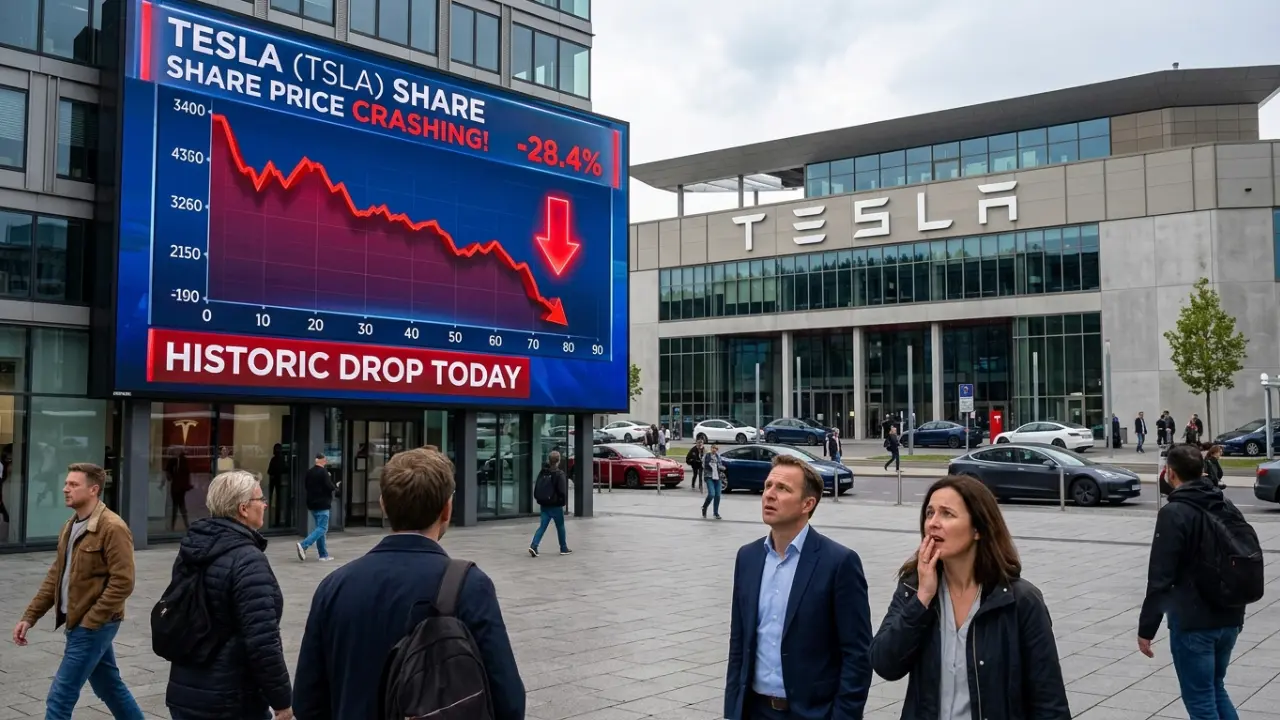
Tesla stock continues to be among the most popular and highly watched stocks in the international market. Tesla has gained recognition in areas such as electric vehicles, energy storage and artificial intelligence, but its stocks have been associated with high price volatility. By the year 2026, the stock has once more become a focal point for investors due to the challenges involved with the combination of the traditional EV business model and the aggressive expansion strategy in robotaxis, artificial intelligence and autonomous driving. Tesla stock has had problems in 2026 due to several issues for the investors. The company’s latest earnings report has added to that debate. Tesla reported quarterly revenue above Wall Street expectations, but its adjusted earnings per share came in below forecasts, leading to a sharp fall in the stock.
Tesla’s Electric Vehicle Business Remains Central
However, regardless of the growing emphasis on AI and autonomous driving, electric cars continue to be the main product of Tesla’s production. Thus, in Q1 2026, the company manufactured 408,386 vehicles and delivered 358,023 vehicles. Model 3 and Model Y vehicles accounted for the majority of production and deliveries during the quarter. Tesla also deployed 8.8 gigawatt-hours of energy storage products.The company’s vehicle business continues to face challenges from increasing competition. Traditional car makers and electric car makers from China have been increasing their portfolio of vehicles, thus offering customers more choices. This makes it important for Tesla to improve its product, keep costs low, and ensure high demand in order to retain its position in the market. The profitability of Tesla will be affected by things like prices, cost of production, and exchange rates. As a result, higher vehicle deliveries do not automatically translate into higher profits.
Robotaxis and AI Are Driving the Tesla Story
A major part of Tesla’s future investment case is based on technologies beyond traditional car manufacturing. Investors have placed significant attention on robotaxis and autonomous driving, with many expecting these businesses to eventually create new revenue opportunities.However, Tesla’s robotaxi rollout has progressed more slowly than some earlier expectations. The service is still limited to certain select locations, and the company has taken a cautious stance amid all the operational and regulatory challenges that it faces. Tesla has announced that it wishes to expand slowly while solving some of the technical and safety concerns. This has posed an important challenge for the investors, namely how fast can Tesla capitalize on its artificial intelligence dreams? The answer could have a major impact on the future valuation of TSLA stock.
Tesla Stock Faces Higher Risk and Volatility
Tesla shares have historically been highly sensitive to company news, earnings reports, delivery numbers and comments from CEO Elon Musk. This makes the stock attractive to investors who are comfortable with volatility, but it also creates significant risks.The latest quarterly results showed why investors are watching the company’s profit margins closely. Despite strong revenues, the stock fell because the earnings were lower than expected. The reaction of the stock market demonstrates that people not only demand growth in revenues but also profitability. Moreover, Tesla needs to demonstrate profitable growth and progress in its long-term projects.Tesla’s high valuation can also contribute to such volatility, since when the expectations about rapid growth are high, any kind of slowing down is perceived as big news.
What Could Shape Tesla Stock’s Future?
Several factors could influence Tesla stock over the coming quarters. Vehicle demand, pricing, profit margins and production efficiency will remain important for the core business. At the same time, investors will closely follow the development of robotaxis, autonomous driving and other artificial intelligence projects.Energy storage is another area that could become increasingly important for Tesla. The company has continued expanding its energy business, and growing demand for battery storage could provide a second major source of revenue alongside vehicles.Analyst expectations also remain an important market influence. Tesla itself publishes compiled analyst consensus estimates but does not endorse the recommendations or conclusions of those analysts. The company’s 2026 consensus data has included expectations for total revenue of around $99.8 billion and vehicle deliveries of approximately 1.69 million, although estimates can change as business conditions develop.
Is Tesla Stock Worth Watching in 2026?
Tesla is still a company full of opportunities but full of risks at the same time. The leadership of Tesla in electric vehicles, battery technology and AI provides several growth opportunities. But the company has to demonstrate that its future technology is able to create solid financial gains while the automotive industry faces growing competition. Tesla shares are not just car company stocks for investors. Its valuation is closely linked to expectations about future technologies, autonomous driving and AI. That creates the possibility of significant long-term growth, but it also means the shares can experience sharp declines when expectations are not met.Investors considering Tesla should focus on the company’s actual financial performance, delivery trends, profit margins and progress in new businesses rather than relying only on headlines or short-term price movements. As with any individual stock, Tesla carries market risk, and past performance does not guarantee future returns. This article is for informational purposes only and is not financial advice.